
Spring – A clean car improves road safety
Away with winter! Tips from GTUE Gesellschaft für Überwachung mbH: Salt and dirt can promote corrosion and stress components. For better visibility and recognition, windows, wipers, and lights should be cleaned and checked. Act environmentally responsibly: Use suitable washing locations, dose agents sparingly, dispose of residues correctly.
For many drivers, the first mild days of spring mean a thorough spring cleaning for their car. After months of wet weather, road salt, and dirt, a thorough cleaning is more than just cosmetic: it preserves the car’s substance and can increase road safety. Clear windows, well-functioning wipers, clean lights, and a dry interior directly impact visibility, recognition, and operability. Those who pay attention to suitable washing locations and appropriate cleaning agents combine care with environmental protection.
Clean the interior
Start with the interior: Floor mats and carpets absorb a lot of moisture in winter – and with it, salt and dirt. Thorough vacuuming, removal of residues, and drying wet mats reduce the risk of fogged windows and unpleasant odors. For dashboards and plastic surfaces, slightly damp microfiber cloths are often sufficient. Aggressive shine sprays are usually not necessary for proper cleaning. During pollen season, it may also be advisable to check the cabin air filter, as a dirty filter reduces air quality and promotes fogged windows.
Clean the exterior
For the exterior, a systematic approach is also recommended. A pre-wash loosens coarse dirt and the typical winter film. Afterwards, paint and glass surfaces can be cleaned more gently, as fewer particles are dragged across the surface. Important areas are wheel arches and rims. Brake dust and salt residues accumulate here, which can attack the material. Door sills, entryways, and seals also deserve attention, as dirt and moisture can settle there. Economical care of rubber seals keeps them supple and reduces squeaking noises.
Windows, mirrors, and lighting are particularly important
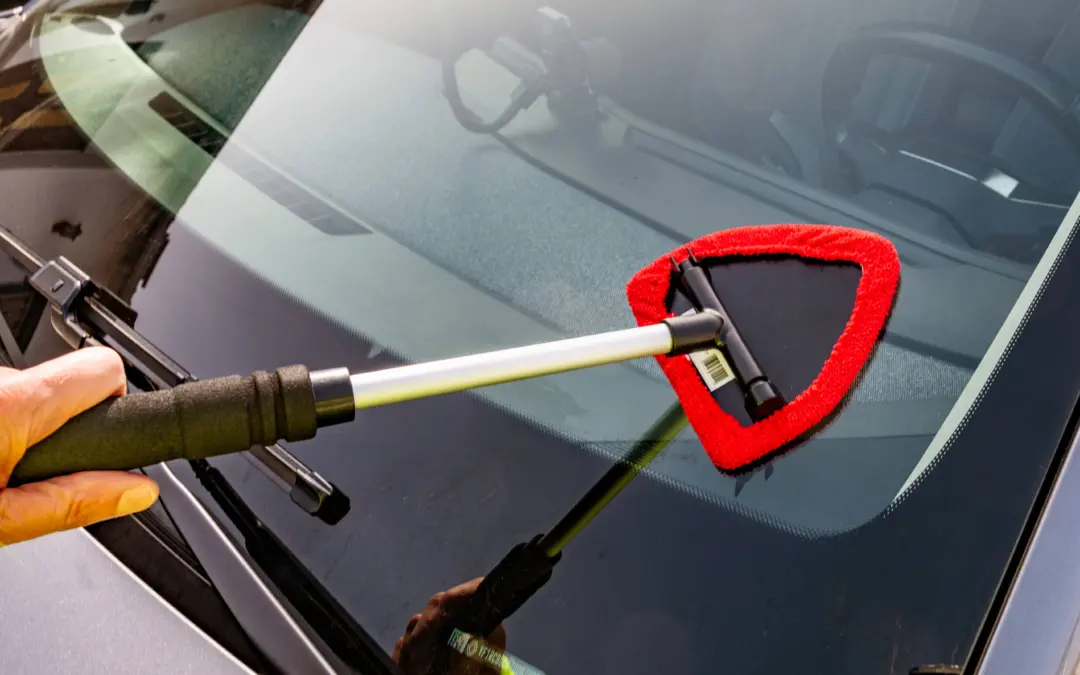
For road safety, windows, mirrors, and lighting are particularly relevant. Streak-free front and side windows improve visibility, which is especially important when the spring sun is low. Note: Cleaning is not only done on the outside but also on the inside. During the winter season, the windshield ventilation runs particularly frequently, and fine particles settle on the glass. Wiper blades should be cleaned and replaced if streaking occurs. Lights and reflectors must be clean so that the vehicle is clearly visible. Additionally, a quick technical check is worthwhile: Does the windshield washer system work? Is there enough cleaning fluid? And are tire tread and pressure within a safe range? Such checks also correspond to the logic of the general inspection, as carried out by the GTUE. While cleanliness does not replace an inspection, it can help to detect abnormalities such as damage, corrosion, or leaks early on.
Sustainability in vehicle cleaning
Sustainability begins with the “how” and “where.” For environmental reasons, cleaning in a car wash or at a designated washing area is better than cleaning by the roadside. There, wastewater is typically controlled, discharged, and treated so that it does not enter the soil and water uncontrolled. For cleaning agents: Concentrates and refill systems save packaging material and transport volume. The dosage is also crucial, because too much cleaner burdens the wastewater and the wallet without improving the cleaning result.
Disposal is also part of sustainability. Cleaner residues, polishes, antifreeze, or heavily soiled cloths do not belong down the drain or in the toilet. They should be collected and disposed of correctly according to local regulations via the recycling center or hazardous waste collection. Empty containers can – depending on the material – be placed in the designated recycling systems. This way, spring cleaning is not only thorough but also responsible.
Author: Michael Teschke | Source and Photo: GTUE
Networking:

Share it:


